21 July 2020

Chronicling a Hobby

Hey. 

The past three weeks have been quite a journey. If I am passionate about something, after reading, the second in that sequence is cinemas. When I look back, I remember two factors influencing my passion for cinema --Doordarshan and the compulsory visit to the theatre with my brother on the same evening that my examinations would be over. I think I waited for my exams to end more for the opportunity to watch the cinema with my brother rather than just the exasperation with exams. Otherwise, I would wait eagerly for Sunday afternoons as DD aired National Award Winning Indian cinemas from different languages. Oh, that was a treat--Malayalam, Odissi, Telugu and of course, Kannada. So much for the nostalgic flashback. Jump Cut to the present-- it's my go-to haven; any day, any time, any reason or no reason. 
          With such noble intentions am I an avid cine-goer. But for the past decade, this passion has fuelled my professional space. The syllabus is offered as part of literary studies in Undergraduate and Postgraduate courses, and films as texts are built into the course structure. Apart from some of my colleagues, at home too, my family thinks and says I am being paid to screen films!! This is one space I really enjoy with my learners. It opens up limitless and no-boundary conversations with my young learners. 
        Now, the lockdown has changed this. But I continue my addiction and have progressed to OTTs--web series is the latest addition to this list. I was talking with my young learners today about how they manage themselves during this lockdown duration. This is traumatic for all of us because, along with other aspects of life, our social and cultural life has come to a standstill. It's a digital relationship now-all the way, phone calls, skype calls, WhatsApp, video chatting and academically, just as we were gearing up for digital humanities, webinars have taken over seminars. The visual medium is ruling. 
        While taking an online class today after a break of almost three weeks, I was only too happy to see them--online, of course.  Curious about how the youngsters are managing to stay floating, I asked them what they do. From learning cooking to embroidering to giving tuitions to sketching and sharing it on Instagram, it was an array of personalised engagements to be ourselves, hopeful that the 'old normal' would return. 
        I realise that what was a simple, unconscious passion some years ago, today it is one of my support systems. It took some time for me to root for this passion. Unlike many creative hobbies like knitting, cooking, embroidering, and trekking, this was an 'unproductive' hobby. It got me no financial aid and some ridicule as we introduced cinemas as texts--both from my colleagues and parents who were angry with their children when they told them films were texts that were prescribed for study. Slowly, but steadily, the strength grew in me. 
        I think many of you would say that this is true for any or most hobbies. The common objection to turning passion into a profession is overwhelming doubt--"After all, it is a hobby and it can't be a Profession from which you earn a livelihood, achieve material success?!" This is one attitude that this lockdown has forced many doubters have had to rethink and accept defeat as well. The past four months have questioned this traditional thinking. I just hope we won't give up on pursuing our path to happiness. On this note, "Three cheers!👍👍 
          Dear Reader, do share your opinions on this 👇
 Please share your comments directly with me at rekhadatta02@gmail.com or message me @rekhadatta1 on Instagram. I shall send the links to you personally. Thanks for your patience.           


13 July 2020

Grey, Yellow, Brown--Ageing, basically!!!

Hey.

For some time, the notion of ageing has made me a curious cat of a different kind. In the past two/three years I have lost some very precious people due to death-aunts, uncles, friends. Of course, many of them lived a full life, experienced life in its many hues and also cries. It is but natural that they should have departed for their heavenly aboard. I feel it is terribly alright and similarly natural to miss them. So, it is very interesting to me to hear people how they respond to ageing. And, no need to add that it reflects each one's perception of life itself. So, I was amused to hear one of my maternal aunts say "ಅಯ್ಯೋ!! ಇದೇನೆ, ನಾವು ಯಾರೂ ಹೋಗೋ ಹಾಗೇ ಕಾಣ್ತಾಯಿಲ್ಲ!! ಎಲ್ಲಾ ಹೀಗೇ ಕೂತಿದೀವಲ್ಲಾ!!"  Who talks of death in this manner!! ಎಂಬ ಯೋಚನೆಯ ಜೊತೆಗೆ ನೆನಪಾಗಿದ್ದು ದ.ರಾ. ಬೇಂದ್ರೆಯವರ ’ಸಾವಿನೊಡನೆ ಸರಸ’. ಸಾವು ಅನಾರೋಗ್ಯದಿಂದ ಬಿಡುಗಡೆಯ ದಾರಿ ಎಂಬಲ್ಲಿದ ಶುರುವಾದ ಆಲೋಚನೆ, ಸಾಯುವ ದಾರಿಯ ಹುಡುಕಾಟದಲ್ಲಿ ಆರೋಗ್ಯ ಮತ್ತು ಜೀವನವನ್ನು ಪುನಃ ಕಂಡು ಕೊಳ್ಳುವಲ್ಲಿಗೆ ಮುಕ್ತಾಯವಾಗುವ ಹಾಸ್ಯ ಪ್ರಮುಖವಾಗಿಸಿಕೊಂಡ ಬರಹ.  ಹಾಗೇ ನೆನಪಾಗಿದ್ದು, ಇಂಗ್ಲೀಷಿನ ಒಂದು ಪ್ರಮುಖ ಪದ್ಯ Death Be Not Proud by John Donne. A very serious poem in which the poet, unlike Bendre, contends to conquer death by the awareness of the eternity of the Soul. That's literatuers' notion of death. Also, it's about the differences in personal and cultural epistemologies.   

        However, the first time I looked at it differently and gave it a serious thought was with a conference in Sociology that was titled somewhat like 'The Sociology of Ageing' etc. With the referential literary mind, the title was interesting, I thought. It was exciting to read the sociological perspective as it was a more objective study of ageing and not so much a personalised, metaphysical response and/or query. As always, did a little bit of net-researching, Google Books etc. The search was an eye-opener of sorts--with books titled 'Handbook of Aging', 'Sociology of Ageing', 'No Aging in India, Alzheimer's, bad family and other modern things' etc. The perspectives are as interesting as they are wide--an analysis of the Indian concept of 'vanaprastha' (to give up worldly life and embrace meditation-No Ageing in India: Alzheimer's, the Bad family and other modern things by Lawerence Cohen) to the role of folkloristics by Roma Chatterji in Critical Themes in Indian Sociology. The arguments presented in these books range from scholars discussing the significance of differentiating between 'elderly', 'ageing' and 'requiring support' to the binaries of biological-psychological, sociological-economical dimensions of ageing. 
              
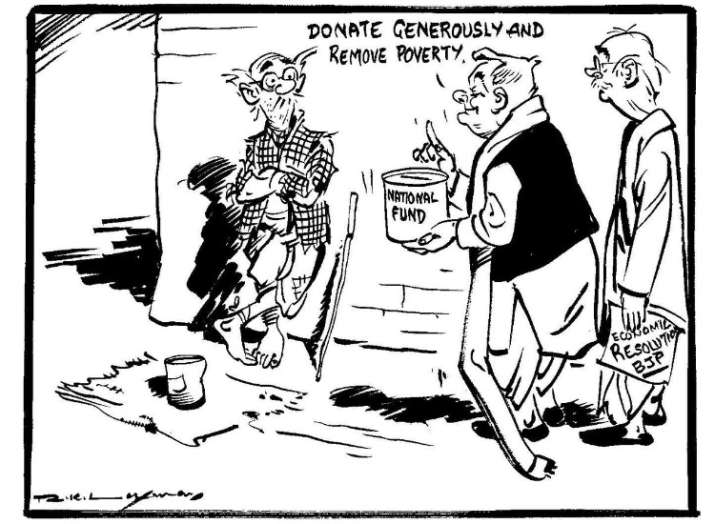
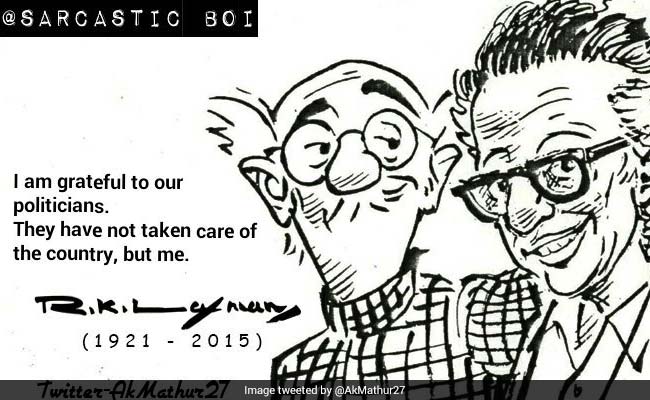
         I think it is the cartoonists who represent and capture the spirit of ageing in all its complexity. Mr Citizen, by R K Laxman, for example. He is that common, ageing man who hardly is seen, heard or acknowledged. But R K Laxman has made this silenced figure speak loud and clear in his cartoons. Most of the cartoons were created in the late twentieth century and some of them hold good even today. (That's some commentary on development plans, though!!) Here are some of those entertaining elders who are spirited and three cheers to their creators as well

Remembering R.K. Laxman: PM Narendra Modi releases new book ... 
  
From Common Man To Common Woman, RK Laxman's Granddaughter Takes ...  


These cartoons portray humour in old age; some familiar situations, and some attitudes to deconstruct the fascination with youth and youthfulness like dating, and being in love.   

Old-age Pensioners Cartoons and Comics - funny pictures from ...

  Old Age Is Always 15 Years Older Than I Am: Voorhees, Randy ...                Calvin and Hobbes QUOTE OF THE DAY (DA): "It sure is a nice day ...


But, one of my personal favourites is Aunty Acid created by Ged Backland. She represents all that is confusion, full of desires and fun that comes with ageing common sensibly- with clarity and articulation.  


Aunty Acid With Age Comes Wisdom by Ged Backland

Done Ooo O0oeo0 No I DON'T KNOW HOW TO Act My Age I'VE NEVER BEEN ...


Inside every older person is a younger person | Ladiesgamers.com

Dear reader, do share your observations, stories and some cartoons 👇

Dear Reader, if you are happy to read this blog, please share👇and hit the follow button 👉and if you want to, share this blog with your friends and like-minded readers. Looking forward to your thoughts. Share your comments directly with me at rekhadatta02@gmail.com or message me @rekhadatta1 on Instagram. I shall send the links to you personally. Thank you for your interest. 

05 July 2020

Lessons for Life-Remembering the every day life guru

Hey.

Today--Guru Purnima-- is an auspicious day for many of us. It is the day Hindus celebrate the birthday of Krishna-Dwaipayana-Vyasa, born to the rishi Parashara and the fisherwoman Satyavathi. The authorship of Mahabharatha is identified as Vyasa. He is also said to be the one who divided and gave the four Veda their names. So, 'Vyasa' (meaning 'to edit, to divide') gave clarity and thus, moved the reader towards Knowledge. Of course, Guru Purnima is celebrated by the Buddhists as the day to observe meditation, to understand the eight precepts of Buddha. It is said that Mahaveer after attaining Kaivalya, inducted Indrabhuti Gautama as his first disciple, becoming a Treenok Guha himself. Basically, it is a day commonly celebrated by many religions as a day to move towards Enlightenment or towards knowledge. The spiritual connotations are celebrated today widely. And we all take this time to remember and thank people who have led us towards 'light', and removed 'the darkness of ignorance' in us, albeit in a simple manner. 

          I too followed the tradition of thanking my 'gurus' on WhatsApp. Since I am in the 'teaching profession', some of my learners remembered me, especially on this day, and thanked me affectionately for whatever they have learned from me in the class or outside of it. Even as I am happy, at the back of my mind is the recognition of how easily the profession lends itself to ridicule. Little wonder that in this profession, it is easy to give up learning, to renew teaching skills; to feel dejected and/or start wondering if all the idealism one tries to stand is worth it. This is one profession that doesn't have perks- financially and/or otherwise too. It is not hyper-celebrated like say that of an actor or a doctor or an engineer; not a profession that would much fetch respect at home either. (The condescension --"It's teachers!! They have earned that laughter" and "They are not 'professionals' like an Engineer or a doctor or a Chartered Accountant or a Bank Manager!!" and, they don't even earn much money--badameshtru still holds good.) And adding insult to injury, we are at the receiving end of all kinds of ridiculous jokes-any number of cartoons, caricatures, jokes. The irony is, when the same teacher/s does do the job well, it is 'Oh! But, you are an exception. Many of them don't even know what they are teaching!!"  As if the whole world has copyrighted honesty, creativity and professionalism!! No wonder, even today, it is so difficult for people to understand why 'boys' especially do a post-graduation in English and 'want' to become a 'teacher'. (By the way, ever wondered why teaching is considered an 'ideal job' for girls?)  

           I have digressed. Even as I fuss and fume about this condition, I just want to thank the everyday life teachers who have made me a little bit different, giving me that understanding which is my strength.

    The first person who comes to my mind is Kempamma and her husband Boraiah. They were our milk providers in Mysore; they would come to my home with their buffalo, and milk them in front of my mother's ever-watchful eye (they should not retain water in their can as they milk the buffalo, you see!!). They would come promptly at 6.00 in the morning, milk the buffalo, measure the milk to my mother's requirement and go. All the 'wet waste' was given as food to their buffalo. This routine was kept up for more than a decade. For the couple, their buffalo was their source of livelihood; it was respected and taken care of as a living being, like a member of the family. It is from Kempamma especially I learnt what it means to respect. One day, after milking the buffalo, she began to drive the buffalo home. It had rained the previous night and the mud was wet. So the hoof print of the buffalo was visible on the wet mud. It made a curious puddle. I was attracted to it and I was about to put my feet into that puddle, the ever-gentle Kempamma shouted at me angrily,  'You children play somewhere else. Don't you dare put your foot into that? It will give my buffalo stomach pain'. She would mince no word if, even accidentally, anyone would stamp on a drop of milk spilt while she measured into the vessel that my mother or our neighbours held out. She would say in an irate voice" Are you people blind? You are stamping on milk, goddess Lakshmi herself. In addition, it will give my buffalo stomach pain'. And my mother would always caution me, 'Walk around carefully as long as Kempamma is here. Or, she will be angry.'  She spared no one when it came to the well-being of her buffalo. Yet, she would be chatting away with my mother and the neighbourhood women who came to take milk from her. This was also the time women spent together sharing their lives, their conversations had nothing to do with their caste or the other everyday life realities of their lives. This was one of my earliest life lessons--that respect should not be categorized; it was not dependent on caste/race/gender or even human vs animal. Respect was a way of life; not just an attitude. The husband, Boraiah passed away first and then Kempamma stopped as she was old and could not come to milk the buffalo. When I remember this, I am unable to understand how farmers can pour milk on the street as a form of protest against the poor price at which the milk is bought by the government or the dairy cooperative societies

            But, she kept our friendship with us beautifully. As a young girl, I used to tease her about why she did not get me Kajjaya after 'Maari Habba' (a local festival celebrating the goddess Mari, considered to be an avatar of Parvati. She was the protector against many diseases, including smallpox.) She would always return my query with 'as if you will eat', for which my answer always was ' you bring it to me and I will eat'. I remember distinctly her coming home to bless me before my marriage. When I was going to be a mother, she sent sweets--kajjaya--with my mother to be given to me. Of course, it has been more than two decades since she passed away. But some of these life lessons learnt from her in these situations are very precious and make me ever grateful for the people who taught me some very precious life lessons.   

         Even as I was reading about Guru Purnima today, I was quite excited to know its postcolonial history. I believe that Mahatma Gandhi revived this tradition to express his respect for the spiritual guru. Wonder if he had seen the Indigenous turn to spirituality!?   

   Dear reader, do remember to share your experiences and comments 👇

Please share your comments directly with me at rekhadatta02@gmail.com or message me @rekhadatta1 on Instagram. I shall send the links to you personally. Thanks for your patience.